
Interrogating the Fool's Front
Was there another path for the CPUSA in the 1930s?

Two conditions distinguished the successful establishment of fascism in this country. The old vanguard parties copped out and supported a nation-state ruling-class war which wasted the blood and energy of their proletariats. At the time, resistance to the war would have seemed like simple common sense. If Stalin gave the order to support the U.S. war effort, he was a fool. In any case, the old vanguards' support should have been for the people's struggle inside the U.S.
- George L. Jackson, Blood in My Eye, 1972
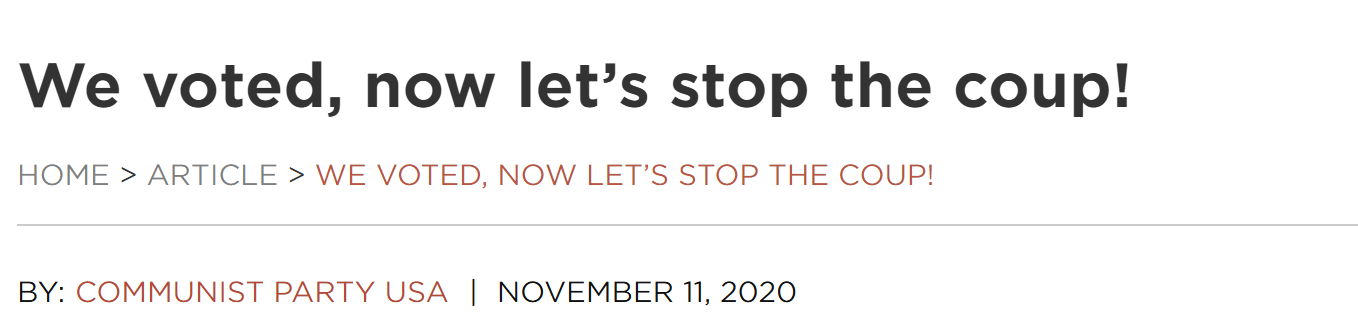
It’s hard not to argue that the decision for CPUSA to liquidate itself into the Democratic Party gave way to the ease of repression that came with the McCarthyite era. But when I read this part of Blood in My Eye, it struck a nerve. Could it have been that the very decision to form the “Popular Front” against fascism was wrong even from the outset? After all, fascism was militarily defeated because of the decisions of the Comintern. Or, at least, the fascism of the Anti-Comintern Pact (aka Axis Powers) was defeated, but Jackson argues that FDR’s New Deal was a fascism of its own. And with the resurgence of fascist units promoted by NATO, it’s hard to argue against what the future outcome of siding with the US would lead to. Therefore, we should interrogate this claim further. Was the formation of the “Popular Front” a foolish decision all along?
This article will mainly focus on the outcome for the United States as this is where George Jackson mainly lays his accusation out. I may make future articles about other allied countries like Britain and France if there is interest displayed for this article.
This substack aims to follow in the footsteps of A. Neuberg to discuss and analyze the latest developments in the art of armed insurrection and proletarian military science. It does not act as an advocacy, but a theoretical analysis of what Blufor and Redfor, NATO’s designation for friendly and enemy units, would do. We must ask what history can tell us about the fight against fascism?
United or Popular
In America the unification of all the Left elements in the trade-union and political movement is underway, and if the Communists occupy a central place in this Left unification, it will give them the opportunity to implant themselves in the broad masses of the American proletariat. The American Communists must form Communist groups wherever there are even a few Communists, must be able to stand at the head of this movement for the unification of all revolutionary forces and should particularly now raise the slogan of a united workers’ front, for example to defend the unemployed etc. The chief accusation levelled against the Gompers trade unions should be their unwillingness to participate in the setting up of a united workers’ front against the capitalists and in defence of the unemployed, etc. However, attracting the best elements from the IWW still remains the main task of the Communist Party.
- EC of the Fourth Congress of the Communist International, Theses on the United Front, 1922 [bold added to replace original italicization]
While occasionally used interchangeably, the “United Front” and “Popular Front” were two different strategies. At the Fourth Congress of the Comintern, the decision was made to promote a united worker’s front which would look like the various communist parties working alongside and leading other Left/anticapitalist factions. This is the “United Front” strategy. Shown in the quote above, the American version of this was the AFL union and the IWW, but other parties were asked to ally with their country’s anarchist and syndicalist groups. The idea here is that the communists become the pole of Left organizing in their respective countries. However, there is a notable contrast with what would be known as the “Popular Front” strategy established at the seventh congress as laid out by Georgi Dimitrov:
Joint action by the parties of both internationals against fascism, however, would not be confined in its effects to influencing their present adherents, the Communists and Social-Democrats; it would also exert a powerful impact on the ranks of the Catholic, Anarchist and unorganized workers, even upon those who have temporarily become the victims of fascist demagogy.
Moreover, a powerful united front of the proletariat would exert tremendous influence on all other strata of the working people, on the peasantry, on the urban petty bourgeoisie, on the intelligentsia. A united front would inspire the wavering groups with faith in the strength of the working class.
[…]
Is it possible to realize this unity of action of the proletariat in the individual countries and throughout the whole world? Yes, it is. And it is possible at this very moment. The Communist International puts no conditions for unity of action except one, and at that an elementary condition acceptable to all workers, viz., that the unity of action be directed against fascism, against the offensive of capital, against the threat of war, against the class enemy. This is our condition.
Here it was the communists who would ally with even capitalist factions like the social democrats in order to combat fascism. Two publishing arms of the DSA, Jacobin and Reform and Revolution take opposite stances on the Popular Front. Braskén with Jacobin sings the praises of the Popular Front by citing the French example that won a street battle against the far-right and claims the tragedy of this tactic is that the Communists did continue it. The seventh congress, of course, stands for everything that the DSA center does:
A nonaggression pact between Socialists and Communists constituted one of the fundamental principles of the new center-left bloc. Communists would no longer issue demands or ultimatums to the social democratic parties only to be met with rejection. Broader unity could only be constructed around compromise. Moreover, according to Togliatti, the Communists were prepared to make concessions. In all cases, the Popular Front emerged as a balancing act to harmonize the interests of labor and capital.
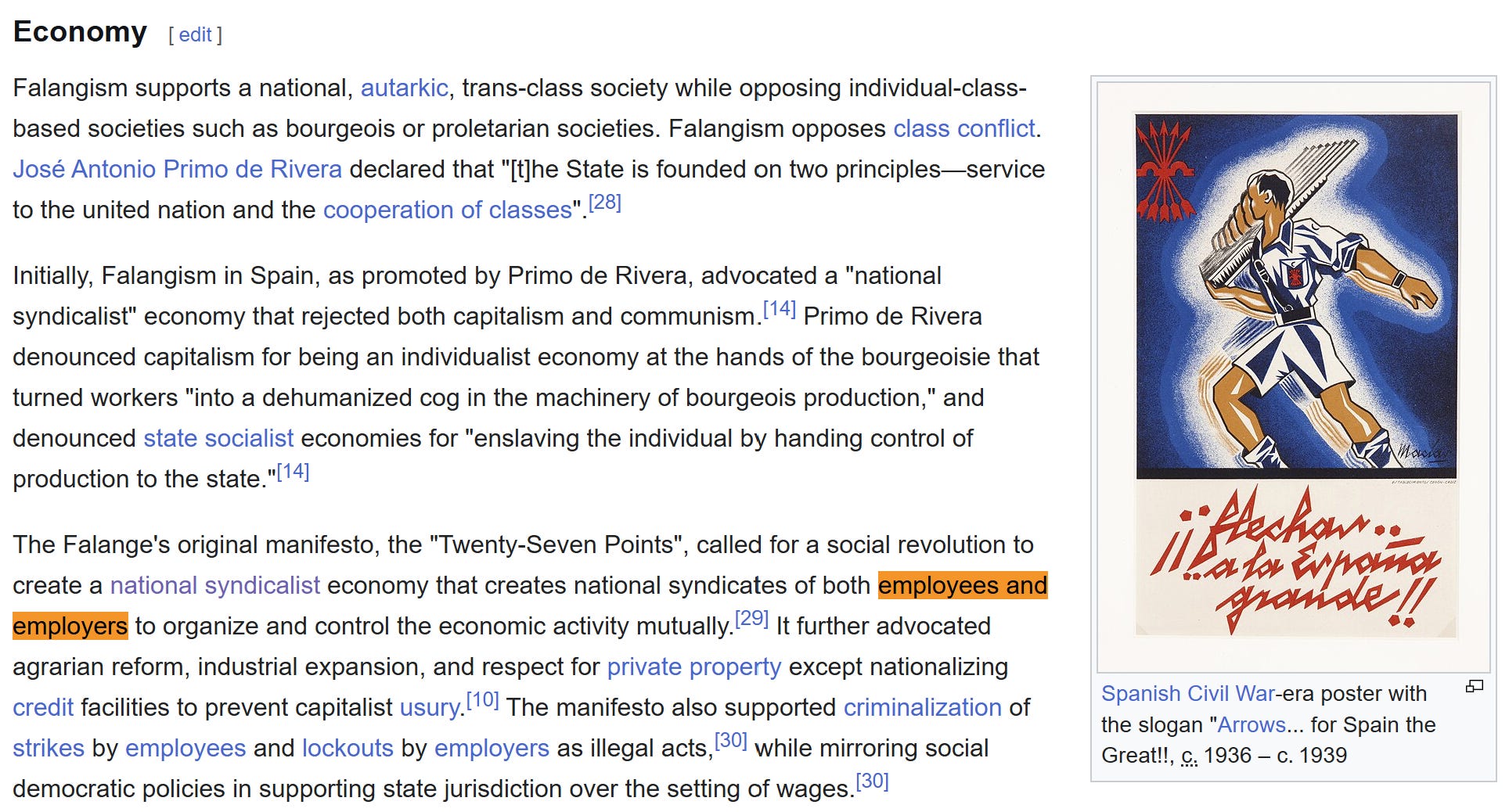
This is a reading of history that demands that we not ask what happened next. The Spanish and Chilean Popular Fronts were both massacred by fascists, betrayed first by those bourgeois elements within. The French Popular Front did little to resist fascism when it wasn’t street battles in 1933, but tanks crossing in 1940. Reform and Revolution is the Trotskyist arm of the DSA and has this to say [bold added by original author]:
Despite the real gains it helped win and the heroic role of communist workers in fighting racism and defeating fascism, the Communist Party’s Popular Front strategy completely gutted the radical pole of the labor movement in return for encouraging a temporary alliance with the USSR which quickly dissolved.
During the war, US labor was seeing the most militant period in its history, building off the three general strikes of 1934 with the most wildcat strikes in a given period organized entirely by the rank-and-file. Yet CPUSA members helped enforce the US government’s agreement with union leadership against any strikes during the war despite the militancy for class struggle.
The party did this because the US war effort was indirectly helping the USSR against Germany and, therefore, class struggle was no longer the priority. This transformed unions from institutions of the proletariat to organizations of the state to control the proletariat, stamping down any bargaining ability they had from the inside and leaving workers without organization to fight back.
However, the Trotskyist criticism here and Jackson’s earlier criticism here also raise the question. Was this militarily-politically necessary? We shouldn’t accept the DSA take that the Popular Front was Good for Left Unity since its continuity represented disaster for the Left. But, if it is true that the US war effort was indirectly assisting in the fight against fascism in the Great Patriotic War and the War of Resistance against Japanese Aggression to the point where it was critical to both causes, then it could be seen as a temporary necessity to prevent the genocide of the Soviet and Chinese people. That the only mistake was not ditching the strategy sooner.
China provides the alternative to what the Popular Front would’ve looked like. The CPC-KMT First United Front was a direct demonstration of what Popular Front politics end up looking like, as the Communist Party of China entered into the KuoMinTang, Chiang Kai-Shek massacred the communists fearing their threat to his power. The same could be said of the CPUSA’s dissolution when entering into the Democratic Party. The CPC-KMT Second United Front represented what dual power facing a larger threat looks like. The CPC established an independent power that defended itself from Japan and the KMT. Skirmishes between KMT and CPC are recorded during the Second United Front, but with overall emphasis still placed on resisting Japan, this then became the Chinese Civil War once Japan was no longer a problem.
The Hypothetical
Using the Chinese alternative, we will fiat that the CPUSA does not take the Popular Front path and instead pushes itself as an independent force effectively fighting two fronts. We’ll start in 1934, a year before the seventh congress of the comintern when CPUSA was at 22,800 members and had not relaxed its restrictions on membership. FDR is president and the first portions of the New Deal are signed into law. Though we’ll say that the November 1934 midterm elections have not yet occurred.
The primary point of anti-fascist agitation would be against the various businesses collaborating with Nazi Germany over this time such as Ford, GM, IBM, and Coca-Cola. This would be done in a similar way to the modern anti-Zionist BDS movement with strikes and boycotts being used to pressure capitalist forces to pull production lines from Germany. As the Washington Post would report, “The Nazis could have invaded Poland and Russia without Switzerland. They could not have done so without GM”. Additionally, the point would’ve been made that Jim Crow and Native American repression represents domestic fascism and must be combatted first.
Over this time, the CPUSA would seek to congregate the dispersed third party efforts such as the Farmer-Labor Party, Progressive Party, Union Party, or Huey Long’s project into a front political party. This front political party is used to funnel left third party support into a vehicle for recruiting into and bolstering support for CPUSA which we can use the CPUSA’s own Worker’s Party of America as the example. We will assume that this party does face a decrease in popularity initially from their co-option by FDR and the economic recovery of the 1930s. However the recession of 1937 and the subsequent elections shows that there was an electoral opposition that could’ve outflanked FDR.
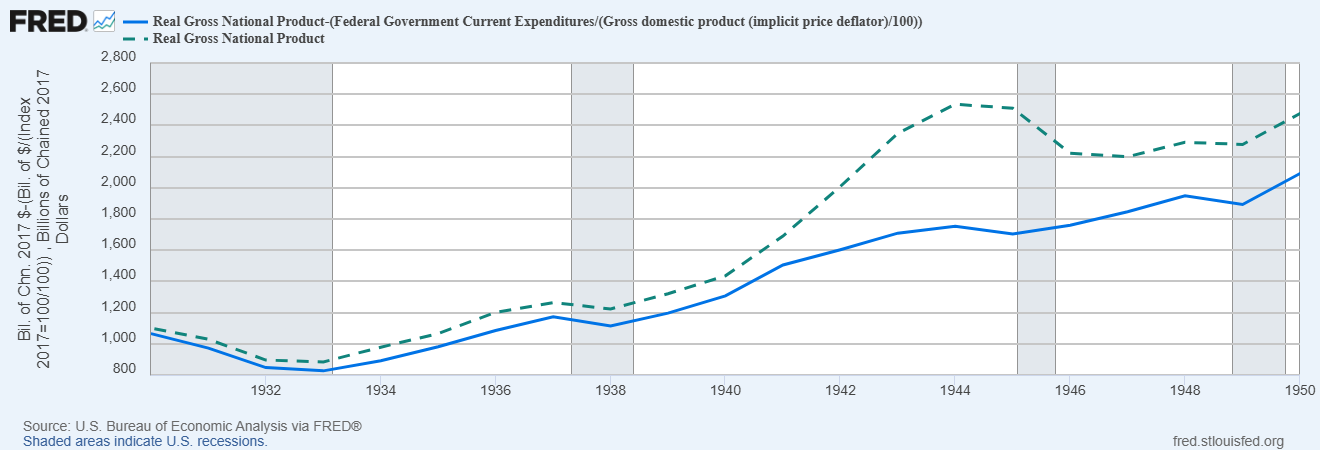
As with all counterfactuals, we begin to engage in multiple alternate universes: does a neutrality principle mean a lack of sanctions on Japan? does a lack of sanctions prevent Japan’s attack on Pearl Harbor? does neutrality imply that the US seeks diplomatic resolution post-Pear Harbor? what of the colonized Philippines? Regardless, we’re left with two worlds from the perspective of our alternate CPUSA one in which the US is in conflict with Japan against its pressure or one in which the US concedes to the flanking position and seeks peace with Japan. In the case of war with Japan, we assume the CPUSA turns imperial war into civil war which halts the efforts of the Pacific and Atlantic campaigns. In the case of concession to the anti-war movement, we assume that there is a lack of military ramp up or programs like Lend-Lease or Cash-And-Carry. The connecting element being that we assume no material support to either the Soviet Union nor China.
So what effect did the US non-neutrality programs have on the Soviets or Chinese? According to the National WW2 Museum in New Orleans on 12% of airplanes, 10% of tanks, and 2% of artillery from US Lend-Lease were used with US support amounting to 4% of Red Army production. With American food comprising 17% of the Red Army’s calorie intake in 1943 due to the Wehrmacht’s control of the Ukrainian breadbasket. Notably 1943 is after the turning point of the Great Patriotic War and some argue that US food deliveries actually accounted for less than 1% of food available with most deliveries occurring after the 1943 Battle of Kursk. Statista tells us that the Republic of China received about 1/5 of the value that the USSR received due to the fall of the Burma Road by 1942. Because China only was capable of receiving from the US for 1 year in comparison to the total of 8 years of the War of Resistance Against Japanese Aggression, then we may be also able to conclude that the Lend-Lease was not a major factor for the war effort.
And what of the US’s direct involvement in the war? The opening of the second front in the Atlantic and the island-hopping campaigns in the Pacific are the main two points of investigation with an assumption that France and Britain will have still had their African and Indo-China campaigns.
The Japanese Army declaration of a “co-prosperity sphere” was born from an already existing slowdown in China and Indo-China. Therefore, the desire to have a “strike south” came from the junior officership who held outsized political sway seeking glory. This means that the diverting of troops from China was a voluntary effort on behalf of Japan due to its contradictions prior to the involvement of the US’s island-hopping. Additionally, the island-hopping’s strategy was mainly to get close enough for strategic bombing campaigns. The 1942 Doolittle raid is widely agreed to have been symbolic rather with the full US bombing campaign really starting in 1944 with China being able to reach Japan at the same time. The US summary report points out that any war with China that was not rapidly won for Japan would doom it due to its lack of resources for a sustained industrial campaign (a prediction that Mao had made in the midst of the war). Production saw continued decrease throughout this time but the report makes several caveats, one is that already produced munitions were often placed in underground depots that protected them, two is that Japanese labor was already becoming less productive due to the effects of conscription, malnutrition, and discontent. Therefore, one can interpret the US’s Pacific campaign as a way to hasten the surrender of Japan particularly before the Soviets could land, but not decisive to Japan’s defeat.
The Opening of the Second Front and even its possibility of happening represented a major diversion of divisions and reserves from the Nazi’s eastern front. Additionally, its success reduced 25% of Germany’s aircraft and 30% of Germany’s vehicle production. Because of a 10 year campaign against Nazi-business collaboration by the CPUSA, we should assume some level of reduction in German industrial production since 1/3 of the Wehrmacht trucks in 1942 were Ford-produced with German officials noting that business relations gave material advantages in production. Which implies that such a campaign against domestic collaboration could’ve had a similar economic effect to Operation Overlord. However, the division diverting could not be replicated in a similar manner. Yet, it may not have been necessary. The Soviets were already well on the road to victory by D-day. And it’s been pointed out there were discussions within Western allied (ex: Operation Unthinkable) and Nazi circles (ex: Himmler) about allying against Soviet advances. Sir Arthur Harris would even conclude by 1942 that a bombing campaign by Britain could be done such that any Western invasion would be a “mopping-up operation” and this would come true with some cities facing over 50% destruction. It’s clear to historical observers that the second front wasn’t opened up for the Soviet’s request but to instead create a limit to the Soviet advance.
Reflections
It’s far easier for me to sit at a computer in the year 2026 and finger-wag at the Communists of the 30s and 40s for not having the insight into WW2 that I have than it is to have been a Communist in the first rise of fascism. But these reflections aren’t meant to claim that I would’ve been a better war planner, but rather to extract lessons for the modern day. I will not go so far as to claim that Stalin was a fool, especially given the way the war starts. But it would certainly be foolish to repeat the same.
It is the task of the Communists to operate as an independent movement. Even in the face of a larger fascist threat, history tells us that merging into the liberal bourgeoisie’s fight against fascism leads to a weaker fight that you will be betrayed for afterward. It is to be understood that the combat between the fascists and liberals is a fight over management of capital and is not a fight over principles that calls for liquidation. The legacy of the Popular Front should be understood as a legacy of a Liquidator’s Front. Not worth repeating, only worth learning from.
This was “Interrogating the Fool’s Front”. B. Neuberg Desk is a substack dedicated to the analysis and discussion of the latest in insurrectionary warfare and proletarian military science. This substack makes no advocacy for specific acts. If you’d like to read more, please follow and share with friends or coworkers.